Home EV Charger Installation: What Every Homeowner Should Know First
Understanding the basics before you install
Adding an electric vehicle charger to your home is a practical upgrade that changes how you refuel your car. Instead of hunting for public stations, you plug in overnight and wake up to a full battery. But the installation itself is more involved than simply mounting a box on the wall. The charger needs a dedicated circuit, proper grounding, and enough capacity in your electrical panel to handle the extra load. Without planning, you could end up with a system that trips breakers or runs slower than expected.
Before you buy any equipment, take a close look at your existing electrical panel. Most homes built before the mid-2000s have a 100-amp service, while newer homes often have 200 amps. A Level 2 charger typically draws between 30 and 50 amps, which is a significant chunk of your home's total capacity. If your panel is already near its limit from air conditioning, electric water heating, and other large appliances, you may need to upgrade the panel or install a load management device. A qualified electrician can run a load calculation to see where you stand. That calculation adds up the amperage of every circuit and compares it to the panel's rating. If the total exceeds 80 percent of the panel's capacity, you have a problem that needs solving before the charger goes in.
What a Level 2 charger actually needs
A Level 2 charger runs on 240 volts, the same voltage as your oven or clothes dryer. It plugs into a dedicated circuit protected by a double-pole circuit breaker. The charger itself has a charging cable that connects to your vehicle, and the cable length matters more than you might think. If your parking spot is far from the wall, a short cable forces you to park awkwardly or stretch the cord across a walkway. Measure the distance from the charger location to your car's charging port, then add a few feet for flexibility.
The installation also requires proper conduit if the wiring runs through exposed areas. Conduit protects the cables from physical damage and keeps the installation code-compliant. In finished garages, the wiring often runs inside the walls, so conduit may not be necessary there. But if the charger mounts on an exterior wall or in an unfinished basement, the electrician will likely run the cable through metal or PVC conduit. Grounding is another non-negotiable part of the job. The charger must be grounded to the same grounding system that serves your home. A poor ground can cause the charger to malfunction or create a shock hazard. A licensed electrician will verify that the grounding electrode system meets current code before they connect the charger.
Where to put the charger
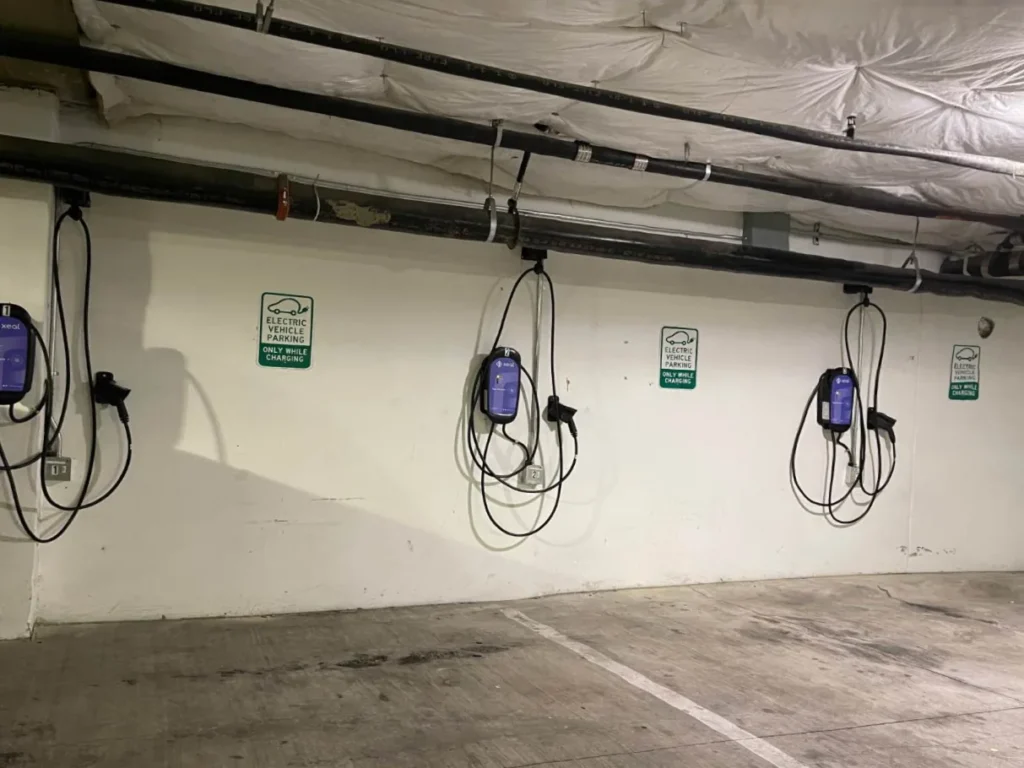
Location is one of the first decisions you make, and it has a big effect on both convenience and cost. The charger should sit close enough to your parking spot that the cable reaches without stretching. But it also needs to be in a spot that keeps the cable out of foot traffic and away from where you walk. If you park in a garage, the side wall near the front of the car usually works well. For outdoor parking, a weather-rated charger mounted on an exterior wall or a pedestal is the standard choice. Outdoor units are built to handle rain, sun, and temperature swings, but the wiring still needs to be protected in conduit and sealed at the entry points.

Think about future needs too. If you plan to add a second EV later, you might want a charger that can share a circuit or a panel that has room for another breaker. Some homeowners install a single charger now but run conduit and wiring that can support a second unit later. That forward thinking saves money down the road because the trenching or wall work is already done. A good electrician can help you plan for that expansion without overbuilding for today.
Electrical panel capacity and load management
The electrical panel is the heart of your home's power system. Every circuit breaker in that panel protects a specific circuit, and the sum of those circuits cannot exceed the panel's rating. Adding a 50-amp charger to a 100-amp panel that already serves a central air conditioner, an electric range, and a water heater will almost certainly overload it. That is where load management comes in. A load management device monitors the total current draw of your home and automatically reduces the charger's power when other large appliances are running. This lets you install a faster charger without upgrading the panel, as long as the overall demand stays within safe limits.
Some chargers come with built-in load management features. Others require an external device installed by the electrician. If your panel is old or has no spare breaker slots, the electrician may need to install a subpanel near the charger location. That adds cost but keeps the installation clean and code-compliant. In any case, do not assume your panel can handle the charger until a professional has done the load calculation. Skipping that step can lead to tripped breakers, overheating wires, and in extreme cases, a fire risk.
Permits and inspections
Most municipalities require a permit for a new EV charger installation. The permit ensures that the work meets local electrical codes and safety standards. The electrician pulls the permit, schedules the inspection, and fixes any issues the inspector finds. This process protects you. If something goes wrong later, the inspection record shows the work was done correctly. Some homeowners try to save money by doing the wiring themselves or hiring an unlicensed person. That often leads to failed inspections, unsafe conditions, and problems when selling the house. A professional installation with a permit and inspection gives you peace of mind and contributes to a safer home charging setup.
Insurance companies also notice unpermitted work. If a fire starts from an unpermitted charger installation, your claim could be denied. The small upfront savings are not worth that risk. Always ask your electrician whether they will handle the permit process. Most reputable companies include it in their quote.
Charger features worth considering
Not all Level 2 chargers are the same. Some have a simple plug-and-go design, while others include smart features like Wi-Fi connectivity, scheduling, and energy monitoring. A smart charger lets you set charging times to take advantage of lower electricity rates. It also lets you track how much energy your car uses over time. That data can help you understand your driving habits and adjust your charging routine. On the other hand, a basic charger costs less and is less likely to have connectivity issues. If you just want to plug in and charge, a non-smart unit may be all you need.
The charging cable length varies too. A 20-foot cable gives you more flexibility in where you park, but it is heavier and bulkier to coil up. A 15-foot cable is lighter and easier to manage, but it limits where you can place the charger relative to the car. Think about your parking situation and choose accordingly. Also check the connector type. Most EVs in North America use the J1772 standard, but Tesla vehicles use a proprietary connector unless you buy an adapter or a Tesla-specific charger. Some chargers come with a built-in cable that works with both, but you need to verify compatibility before buying.
What to expect during installation day
On installation day, the electrician will first turn off the power to your panel. They will run the new circuit from the panel to the charger location, installing conduit and pulling wires along the way. Then they mount the charger on the wall or pedestal, connect the wires, and install the circuit breaker in the panel. After that, they power everything up, test the charger, and verify that it communicates with your car. The whole job usually takes half a day, but it can take longer if the panel needs upgrading or the wiring route is complex.
The electrician will also explain how to use the charger and what to do if it stops working. Most chargers have a simple status light that tells you whether it is charging, waiting, or has a fault. Keep the manual handy for troubleshooting. If the charger trips the breaker repeatedly, call the electrician back. That could mean a loose connection, a ground fault, or an issue with the charger itself.

Long-term value and peace of mind
A professionally installed EV charger adds convenience to your daily routine and can increase the resale value of your home. As more buyers look for homes with EV charging already in place, having a dedicated circuit and a modern charger makes your property more attractive. The installation also reduces the wear on your car's battery because you can charge at a steady, moderate rate instead of relying on fast public chargers all the time.
But the real benefit is the reliability that comes from a code-compliant, well-planned installation. You do not have to worry about tripped breakers in the middle of the night or a charger that stops working because of an overloaded panel. A careful approach to the electrical work, including proper load calculation, correct grounding, and a dedicated circuit, creates a safer home charging setup that serves you for years. That peace of mind is worth the upfront effort of planning and hiring the right professional.